


Before we talk about conservatives and progressives, let's talk about something more fundamental: why people hold the values they do. Because beneath the political labels — which tend to generate more heat than light — are genuine human concerns. A fear of loss. A desire for fairness. A belief about what makes a good society. These aren't irrational positions. They're the expression of deeply held values, shaped by experience, culture, and circumstance.
I've spent a long time studying how values work — across individuals, organizations, and cultures. One pattern emerges consistently: people who seem to be in irreconcilable opposition are often trying to protect the same things through different means. Understanding that doesn't dissolve disagreement. But it makes the disagreement navigable. And that, right now, feels important.
What conservative values are actually about
Conservatism, at its core, is a values system oriented around continuity. The instinct is to protect what works — institutions, traditions, social structures — against the risk of untested change. Edmund Burke, the eighteenth-century political philosopher often credited as conservatism's intellectual founder, argued that society is a contract between the living, the dead, and those yet to be born. In other words: don't be so quick to discard what took generations to build.
The values that flow from this instinct tend to include personal responsibility, limited government intervention, free markets, strong national identity, and the preservation of traditional social institutions. The underlying concern is stability — the belief that sudden, top-down change carries risks that are easy to underestimate and hard to undo.
What's often missed in caricatures of conservatism is the genuine moral seriousness beneath it. The emphasis on individual responsibility isn't simply selfishness in ideological clothing — it reflects a belief that human dignity is expressed through agency, not dependency. The skepticism of government isn't nihilism — it's a concern that concentrating power in any institution, however well-intentioned, produces its own distortions.
What progressive values are actually about
Progressivism begins from a different vantage point. Where conservatism sees existing structures as worth preserving, progressivism sees them as worth examining — and, where necessary, reforming. The core concern is justice: the belief that the playing field is not level, that inherited disadvantages are real, and that a just society has a responsibility to address them.
Progressive values typically include equality of opportunity, environmental stewardship, access to healthcare and education as rights rather than privileges, protection of marginalized communities, and a willingness to use government as a tool for social improvement. The underlying moral claim is solidarity — that we are, in some meaningful sense, responsible for one another.
And again, what's often missed: progressive positions aren't simply naive idealism. The push for systemic change reflects a real observation — that individual effort doesn't always overcome structural disadvantage, and that pretending otherwise can perpetuate harm. The instinct toward collective action comes from a genuine belief in human interconnection.
Where they actually overlap
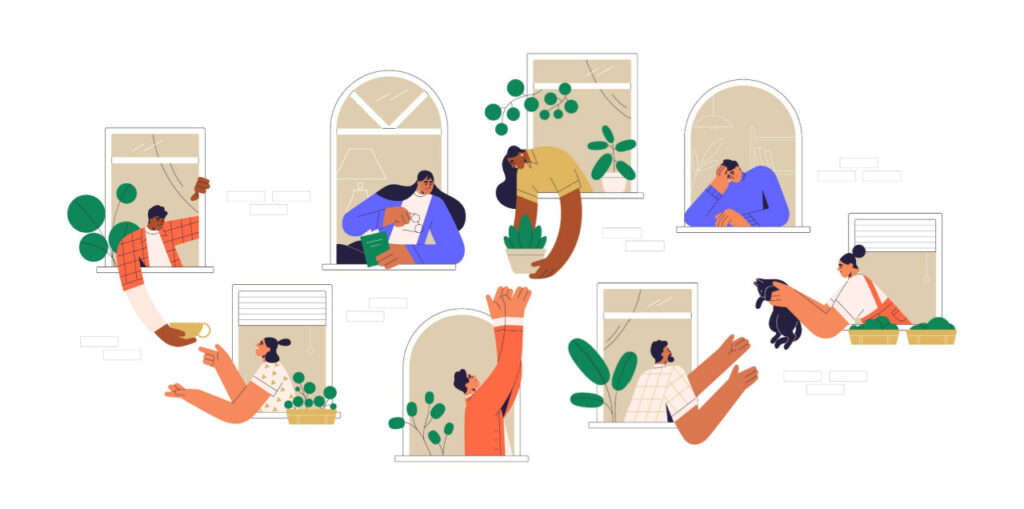
The polarized political landscape makes it easy to forget how much conservatives and progressives share. Both care about human flourishing — they disagree on the path, not the destination. Both believe in civil liberties, even if they prioritize different ones. Both are, at their best, motivated by a genuine desire for a safer, more prosperous, more just society.
Some research finds unexpected common ground beneath the labels. A Penn State survey, for example, found Republicans, Democrats, and independents expressing nearly identical support for funding local parks, and other studies suggest that polarization eases once people recognize the values they actually share. That doesn't erase the well-documented, growing division on plenty of specific policy questions — the picture is mixed, not tidy. But it's mixed in a hopeful direction more often than we'd guess. Jonathan Haidt's moral foundations theory, for instance, identifies care, fairness, loyalty, authority, sanctity, and liberty as the six foundations of moral intuition. Conservatives and progressives don't disagree about whether these things matter — they weigh them differently, and apply them to different domains.
That reframing changes everything. It means political disagreement isn't a clash between people who have values and people who don't. It's a disagreement about which values to prioritize in a given context. That's a very different conversation — and a much more productive one.
Why polarization is the real problem
What concerns me more than conservative versus progressive is the increasingly rigid tribalism around those identities. When political affiliation becomes a core part of how people see themselves — when it becomes identity — the capacity for genuine dialogue collapses. You stop evaluating ideas and start defending territory.
The mechanisms driving this are still debated among researchers. Partisan media, social media algorithms, and geographical sorting are all studied as likely contributors — one creating information environments where one side is always right and the other always wrong, another rewarding outrage over nuance, the third meaning many people spend their lives almost exclusively among those who already agree with them. But scholars don't fully agree on how much weight each factor carries, and some studies find algorithms play a smaller role than we tend to assume. The result is a growing inability to even understand why someone might reasonably hold a different view.
This is a values crisis as much as a political one. The values that make disagreement generative — curiosity, humility, genuine openness, the willingness to be changed by an encounter with another perspective — are being squeezed out by the values that make it destructive: certainty, contempt, and the need to win.
A more useful question
Rather than asking "are you conservative or progressive?" — a question that mostly sorts people into teams — there's a more illuminating question: what do you most want to protect? And then: what are you most afraid of losing?
In my experience working with people across very different political and cultural backgrounds, those questions tend to produce honesty. And in that honesty, there's almost always more shared ground than either side expected. The person who fears the erosion of community values and the person who fears the exclusion of certain communities from those same values are both, in their own way, trying to protect something worth protecting.
The best political thinking — left, right, or center — has always been a negotiation between continuity and change, between individual and collective, between the world as it is and the world as it could be. We need both instincts. A society with no conservative impulse loses its grounding. A society with no progressive impulse loses its capacity to grow.
How to engage across the divide
None of this requires abandoning your own values. It requires holding them with enough confidence that you don't feel threatened by someone else's. A few things help:
Lead with curiosity. Ask people what they actually believe and why, rather than assuming you already know. You'll often be surprised. The caricature rarely survives contact with the actual person.
Distinguish between the value and the policy. Two people can share the value of fairness and reach completely different conclusions about how to pursue it. That's not hypocrisy — it's the normal complexity of applying principles to a messy world.
Be honest about your own tribe's failures. Every political tradition has blind spots, extremes it disowns too slowly, and positions it holds for tribal rather than principled reasons. Acknowledging that in your own group is the beginning of credibility with anyone outside it.
Focus on what you're for, not just what you're against. Shared opposition to an outcome ("this is bad for people") is more durable common ground than shared opposition to a party or a person.
The underlying truth
Conservative and progressive values are not enemies. At their best, they're in dialogue — a productive tension between the wisdom of what has been built and the courage to imagine what could be built. The danger isn't that people disagree. Disagreement, handled well, is how societies figure things out. The danger is when disagreement hardens into contempt, and curiosity gets replaced by certainty.
What we share, underneath the labels, is the desire for a world that works — for us, for those we love, and for people we'll never meet. That's worth remembering. Especially when the conversation gets hard.
Discover your own core values
The free, research-backed Values App assessment reveals your top five in about three minutes — no sign-up required.
Take the free assessment