

Saying that we should live in alignment with our values is easy, but how do we align in everyday life, both through times of opportunity and times of challenge?
In the popular self-help book The 7 Habits of Highly Effective People, author Stephen R Covey suggests that in order to live a successful and happy life, one must live by a set of solid principles. People who have achieved immense success – think Bill Gates, Steve Jobs, and Warren Buffett – have all stated that success is greater than money, material possessions, or academic credentials. It’s not about the size of our home or the number of holidays we’ve taken. At end of the day, success is reflecting on a productive life lived in alignment with our principles – the things we value.
Our principles are the anchors that keep us grounded during life’s storms. They are our North Star and the litmus test we use for decision-making, especially in the midst of adversity.
When we live in alignment with our values, our everyday behaviors exemplify the things we value. This is often easier said than done, but those who are consistent gain respect and admiration from others. People who abide by a strong set of principles are generally the same people who leave a lasting positive impact on this world.
What does it look like to live in alignment, to stay true to ourselves even when it seems like the world is against us?
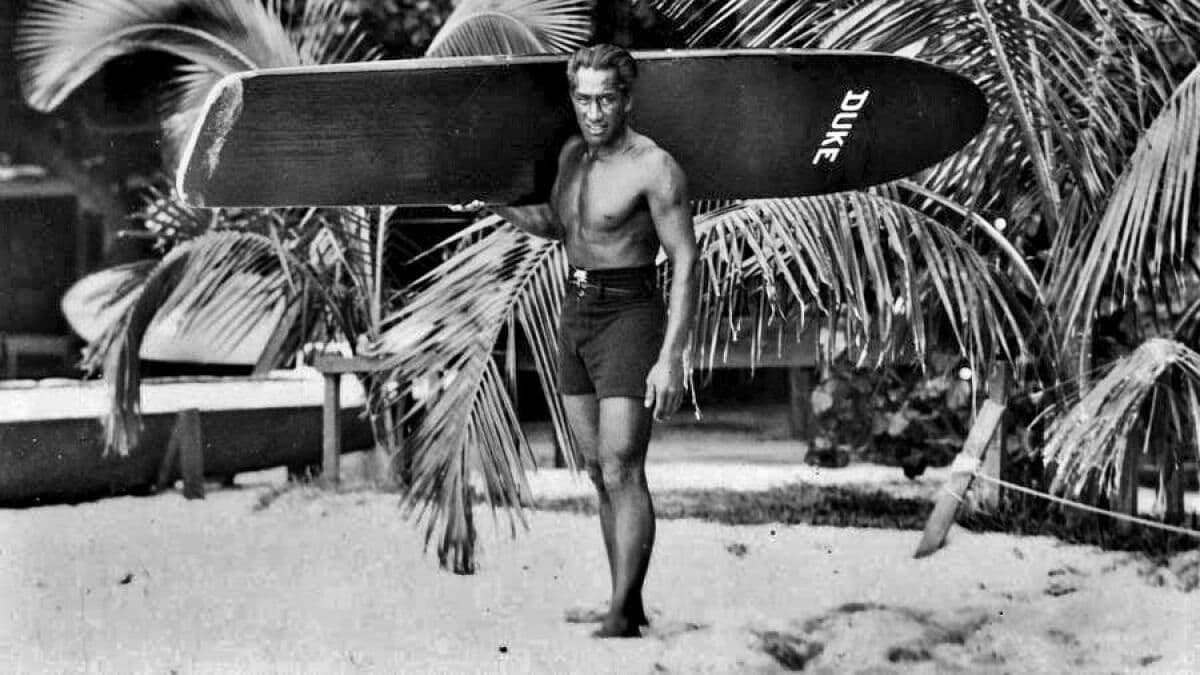
Meet the father of modern surfing, Duke Kahanamoku
Born in Honolulu in 1890, Duke dropped out of high school to earn money to support his family. He spent his free time on the beach at Waikiki and sent ripples around the swimming world when, as a relative unknown, he smashed the American freestyle record, swiftly earning himself a place on the USA swimming team. A remarkable talent, Duke competed in four Olympic Games between 1912 and 1932, winning gold in the 100-meter freestyle at Stockholm in 1912 and again at Antwerp in 1920, taking silver in Paris in 1924, and even serving as a water polo alternate at Los Angeles in 1932 – five Olympic medals across two decades.
He was a gallant sportsman who valued the ‘aloha’ spirit of his homeland. Aloha is often linked to the breath of life – it comes from ha, the Hawaiian word for breath – but at its heart it simply means love, compassion and kindness, a sacred way of living that encourages people to treat each other with love and respect.
The 2022 movie, Waterman, is a touching tribute to the life and legacy of one of surfing's most beloved characters.
The Dukes Creed
In Hawai’i we greet friends, loved ones or strangers
with Aloha, which means love.
Aloha is the key word to the universal spirit of real
hospitality, which makes Hawai’i renowned as the
world’s center of understanding and fellowship.
Try meeting or leaving people with Aloha.
You’ll be surprised by their reaction.
I believe it and it is my creed.
Aloha to you.
Duke Paoa Kahanamoku
Despite experiencing racial discrimination due to his darker skin and struggling financially due to remaining an amateur athlete, Duke embodied the aloha spirit. Stories still circulate of him building such a commanding lead that he'd glance back at the rest of the field mid-race – not fully documented, but often told as a small window into his generous, unhurried sportsmanship.
Beyond the swimming pool, Duke’s true passion was surfing – an ancient and sacred pastime that had been at serious risk of dying out in his homeland. When Protestant missionaries arrived in Hawaii, they considered surfing to be a sinful activity and, along with many other aspects of Hawaiian tradition and religion, tried to erase it from the culture. Were it not for the tenacity of Duke and a few other dedicated locals, surfing – the Hawaiian sport of kings – might not exist today.
Spreading the value of aloha worldwide
World-renowned for his swimming prowess, demand for Duke’s attendance at competitions and exhibitions around the world increased. He embarked on several world tours both to give swimming demonstrations and to share his passion for surfing. He gave a landmark surfing demonstration at Freshwater Beach in Sydney, Australia, starting on Christmas Eve in 1914 and continuing into January 1915 – widely credited as introducing modern surfing to Australia – shaping his own board from local sugar pine and showing onlookers how to ride waves. He gave similar demonstrations everywhere, from New Zealand to California, planting the seeds of what would become a global subculture.
Duke was inducted into the Surfing Hall of Fame and, when Hawaii became a state in 1959, was named an Ambassador of Aloha. Throughout his life, Duke continued to surf on traditional Hawaiian surfboards, staying true to his roots and the aloha spirit.
Duke could have forgotten his values and lived life passively, allowing the missionaries their way or becoming angry at his own circumstances. Instead, he stood by his principles, embodying aloha and not only preserving Hawaiian culture but sharing it with the world.
We can either go through life with vague and flexible principles or we can stand firm even when the world seems against us. Recognizing common obstacles to values alignment is a good first step.
Discover your own core values
The free, research-backed Values App assessment reveals your top five in about three minutes — no sign-up required.
Take the free assessment