
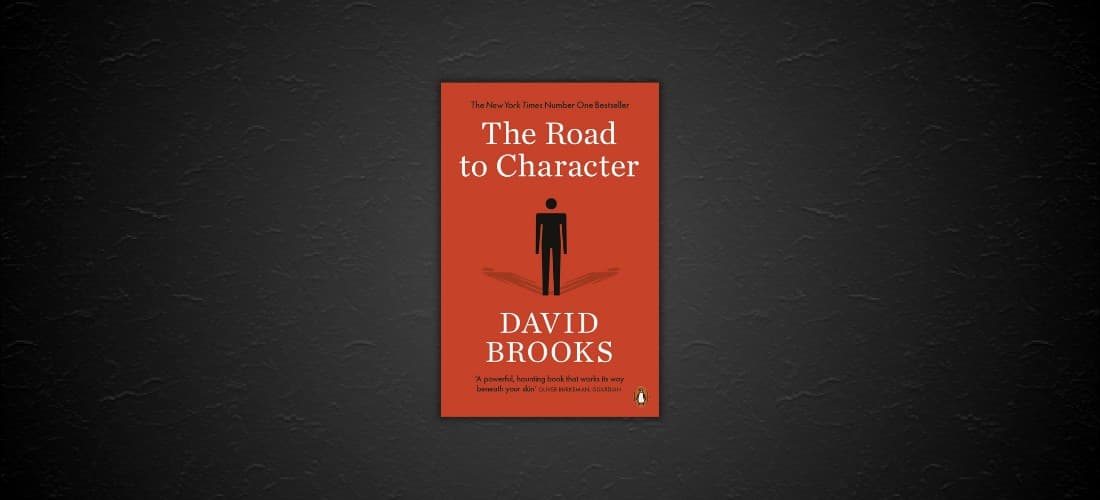

David Brooks opens with a distinction you won't easily shake: resume virtues versus eulogy virtues. Resume virtues get you hired. Eulogy virtues are what people say about you afterward — were you kind, were you brave, could people trust you when it mattered. Most of us tend the first list far more carefully, even though we'd insist the second matters more. Drawing on the life stories of about a dozen historical figures across eight biographical chapters, Brooks sets today's "culture of the Big Me" against an older, quieter ethic that prized self-effacement over self-promotion.
What this book reveals about core values
None of Brooks's subjects stumbled into depth of character; they fought for it, often against their own worst instincts, over decades. Character here isn't a trait you're born with — it's a discipline, practiced even when no one's watching. Moral depth, he argues, comes from confronting your own weaknesses rather than performing your strengths. Humility isn't a personality quirk in this account; it's a precondition. Integrity isn't one grand gesture — it's a thousand small private decisions nobody will ever know about, made the same way whether or not anyone's watching.
Key takeaways
- Character isn't inherited or purchased. It's assembled daily, in the small moments where you choose the harder right over the easier wrong.
- Real fulfillment comes from being accountable to something larger than yourself.
- Inner character is the foundation of outer achievement, whether or not it ever gets noticed.
What stays with me is how little of this work stays private in its effects. The virtues you cultivate in your own quiet struggle leak into your marriage, your friendships, the way you raise a kid. Character is one of the few things you build for yourself that ends up belonging to everyone around you.
About the author
David Brooks spent more than two decades as an op-ed columnist for The New York Times and has appeared regularly on "PBS NewsHour," NPR's "All Things Considered" and NBC's "Meet the Press." These days he writes as a staff writer for The Atlantic and holds a senior fellowship at Yale's Jackson School of Global Affairs, alongside his membership in the American Academy of Arts and Sciences. He is the bestselling author of The Social Animal: The Hidden Sources of Love, Character, and Achievement; Bobos in Paradise: The New Upper Class and How They Got There; and On Paradise Drive: How We Live Now (And Always Have) in the Future Tense.
"The road to character is built by confronting your own weaknesses, not flaunting your strengths."
Discover your own core values
The free, research-backed Values App assessment reveals your top five in about three minutes — no sign-up required.
Take the free assessment