
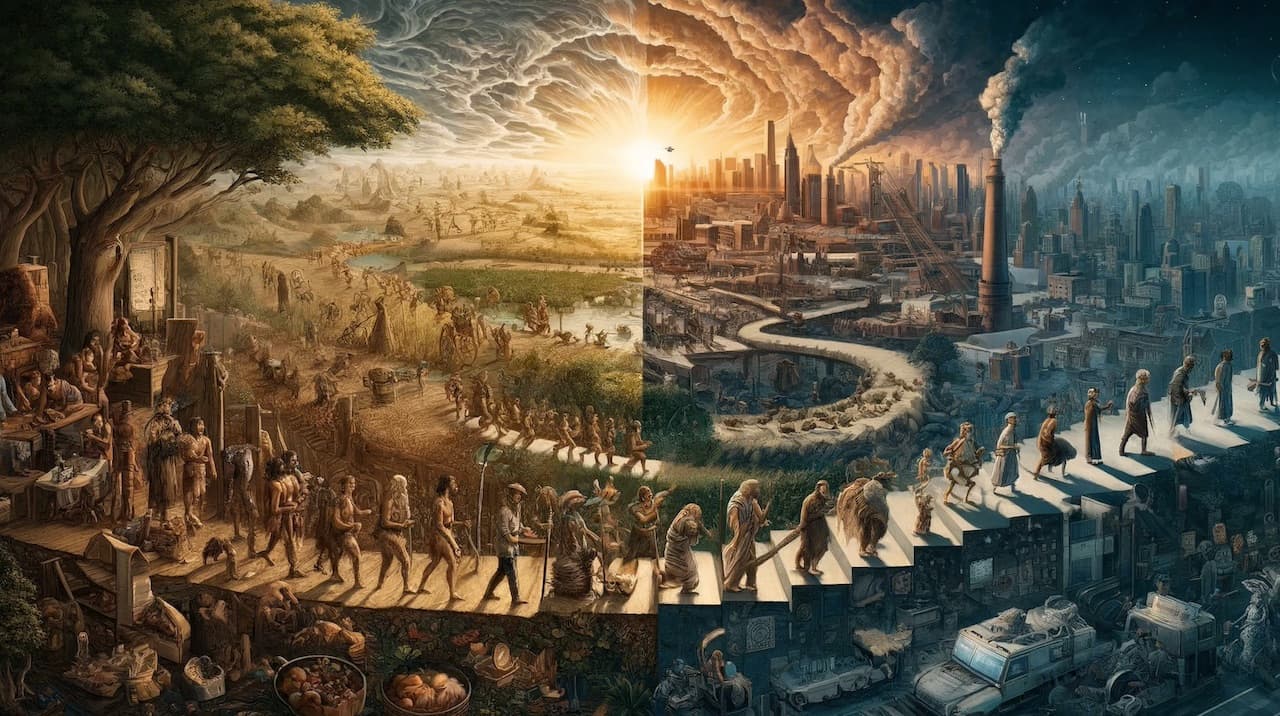

Sometimes being alive feels lonely, or daunting, or just plain alien — like we showed up here from somewhere else. I understand the feeling. But it's not really true. Alan Watts, the philosopher who liked to call himself a "philosophical entertainer," used to put it something like this: just as an apple tree apples, planet Earth peoples.
Zoom out far enough and you could even say our entire universe produces people — that we're tiny apertures through which the universe gets to observe itself. I rather like that image.
For most of our history, human core values weren't so different from the values of any living organism. Namely:
- Self-preservation: The innate drive for self-preservation sits at the core of every living entity. This value propels an organism's quest for essential resources — food, shelter — and its instinct to evade threats. Here's the basic tenet of survival: an organism must protect and sustain its own life.
- Reproduction: Beyond mere survival, life is about lineage — passing genetic material to successive generations. Reproduction is vital for species continuation and involves elaborate strategies, rituals, and behaviors to secure a mate and produce offspring.
- Adaptation: Adaptation shows life's resilience. It allows organisms to modify themselves in response to changing environments. This continual adjustment, honed by natural selection, is what fuels the spectacular diversity of life on Earth.
- Homeostasis: Internal equilibrium — homeostasis — is paramount. Living organisms are perpetually adjusting physiological processes to maintain a stable internal environment. This delicate balance supports cellular function and overall health.
- Cooperation: Nature gets painted as red in tooth and claw, all competition, but cooperation is just as fundamental. From symbiotic relationships between species to complex social structures within animal groups, collaborative interactions are everywhere, and they enhance the chances of both survival and reproduction.
- Energy Conservation: Life is a masterful energy economist. Every organism, from a single cell to a complex creature, has evolved strategies to optimize energy use. This efficiency — think torpor, hibernation — is essential for enduring periods of scarcity.
For our ancestors, catching an animal, hugging a loved one who'd returned safely, or stumbling on a fruit tree laden with gifts — these things would have brought real joy. Real meaning, too.
But trace the arc of human history and you find our core values evolving, adapting to the changing landscape of our species' life and culture. From hunter-gatherers, to early agrarian cultures, to our interconnected global society today — what counts as "valuable" keeps shifting. It reflects our external circumstances as much as our internal sense of what matters.
And yet our primal survival values never really leave us. They're always accessible, and they switch on instantly in an emergency. Someone in the middle of an earthquake isn't thinking about higher-level values like innovation or prestige. What matters in that moment is self-preservation, safety, homeostasis — restoring the balance between one's internal and external world. Only later, once the ground stops shaking and those survival needs are met, does a person start reaching again for the higher-level values that give life growth and meaning. Sometimes those higher-level values have changed because of what just happened. Often, actually.
Let's walk through how values have shifted across human history.
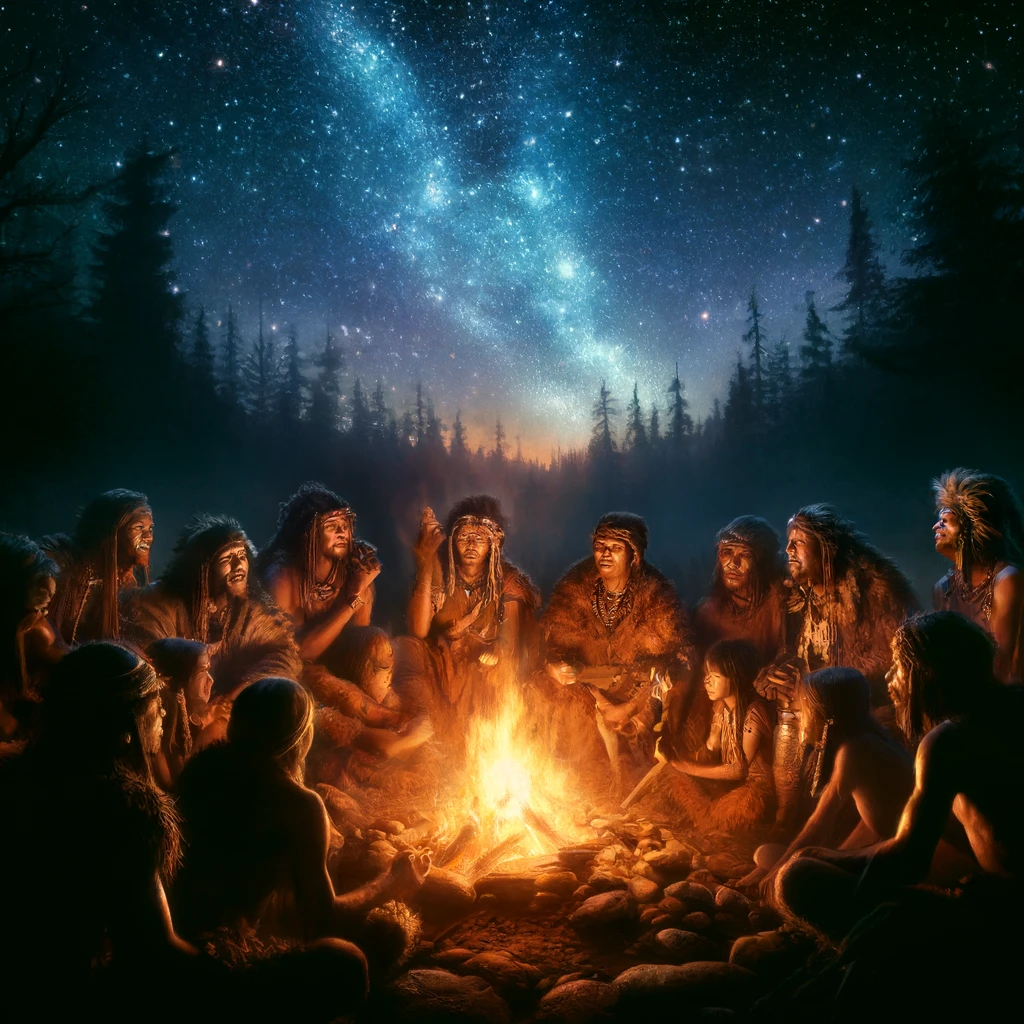
Hunter-Gatherer Societies
In the time of our hunter-gatherer ancestors, core values were tied tightly to survival and community. Cooperation wasn't optional — without it, hunting large game or defending against threats would have been close to impossible. Sharing was a core value too. What was caught or found got distributed within the group, because everyone's well-being depended on everyone else's.
Respect for nature was inherent — not a virtue to be cultivated, just a fact of how things were. The Earth wasn't a resource; it was a system humans were part of. Rivers, mountains, stars, the sun — these were gods and demons, worshipped or feared as such.
Agricultural Revolution
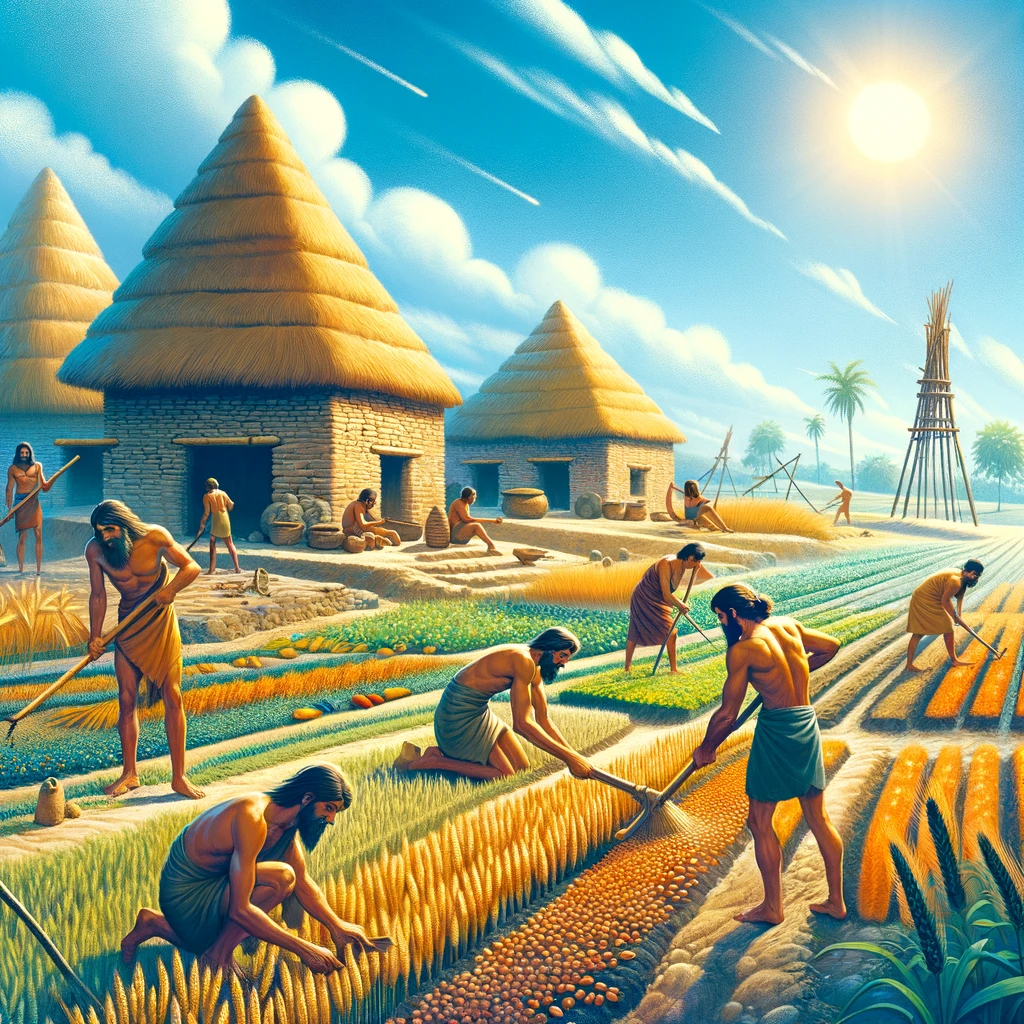
With the dawn of agriculture, societies grew larger and more complex, and values shifted to match. Accumulating resources — land, crops, eventually money — became central, since stability and predictability were now prized over nomadic life. Hierarchies and social classes emerged in this period, and with them came a rising premium on authority and social order.
Spirituality often grew more structured too, organized religions (including the worship of kings or pharaohs) reflecting and reinforcing the values of the day. Here's the paradox: this era brought heightened social interconnectivity, but it also marked a growing detachment from nature — which increasingly came to be seen as something to conquer or exploit, rather than belong to.
Industrial Revolution to Modern Times
As societies industrialized and urbanized, a marked shift took hold toward efficiency, innovation, progress. Individualism began eclipsing the community-centered values of earlier eras. Success got redefined, increasingly, around material wealth and social standing — which made competition a prevailing social force. At the same time, knowledge and education rose in prominence, often treated as the essential tools for personal and societal advancement.
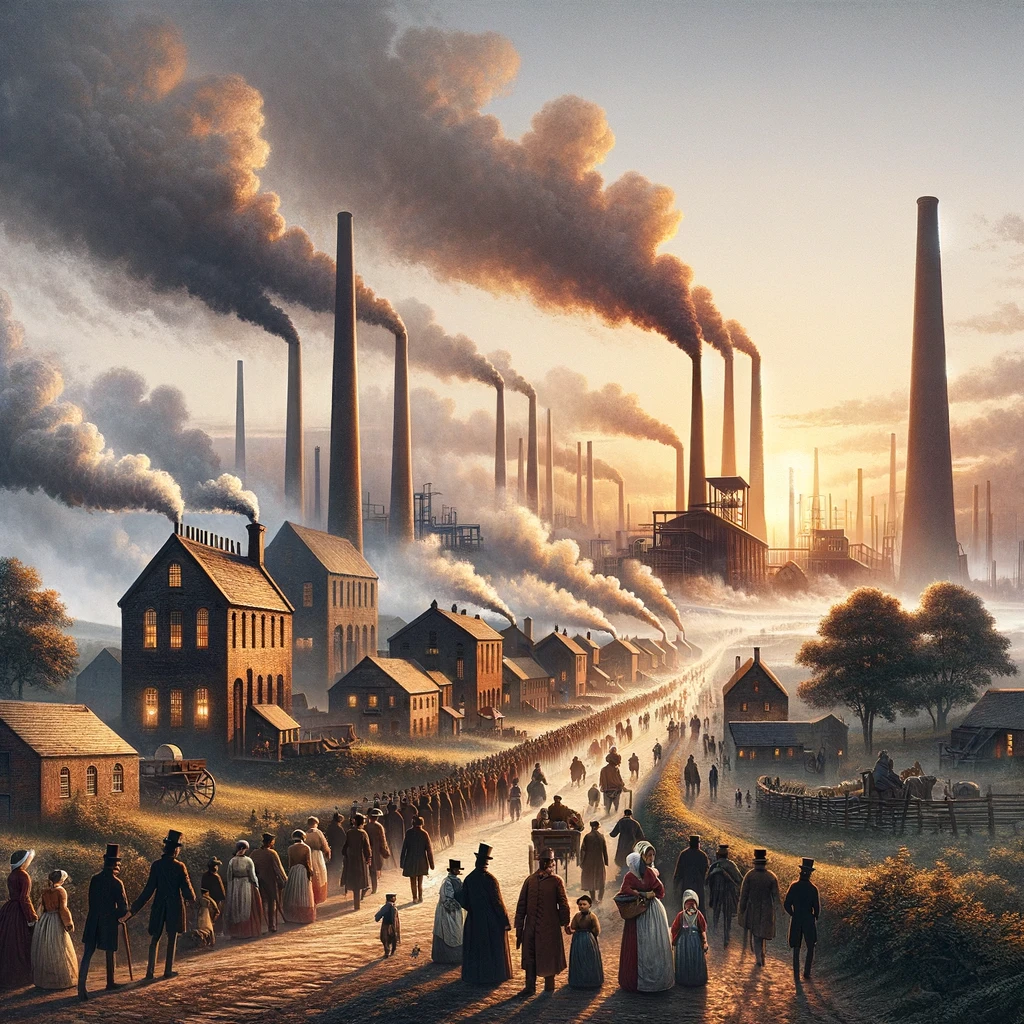
For many, traditional religious belief gave way to a more scientific worldview, and our detachment from nature — and from our food sources — kept widening. And to be fair, there have been real gains along the way. A five-year-old in England in 1841 had a life expectancy of 55 years. That figure now stands at 82.
Longer, though, doesn't automatically mean better. Modern ailments — obesity, mental health disorders — bring their own set of challenges. In the US, life expectancy has actually declined in recent years, with a 35% rise in suicides and a tripling of fatal drug overdoses between 1999 and 2019. Numbers like that point to something deeper: a lot of people struggling to find meaning and fulfillment. A 2023 Meta-Gallup survey spanning 142 countries found that nearly a quarter of people feel lonely. Close to one in four.
Contemporary Reflection
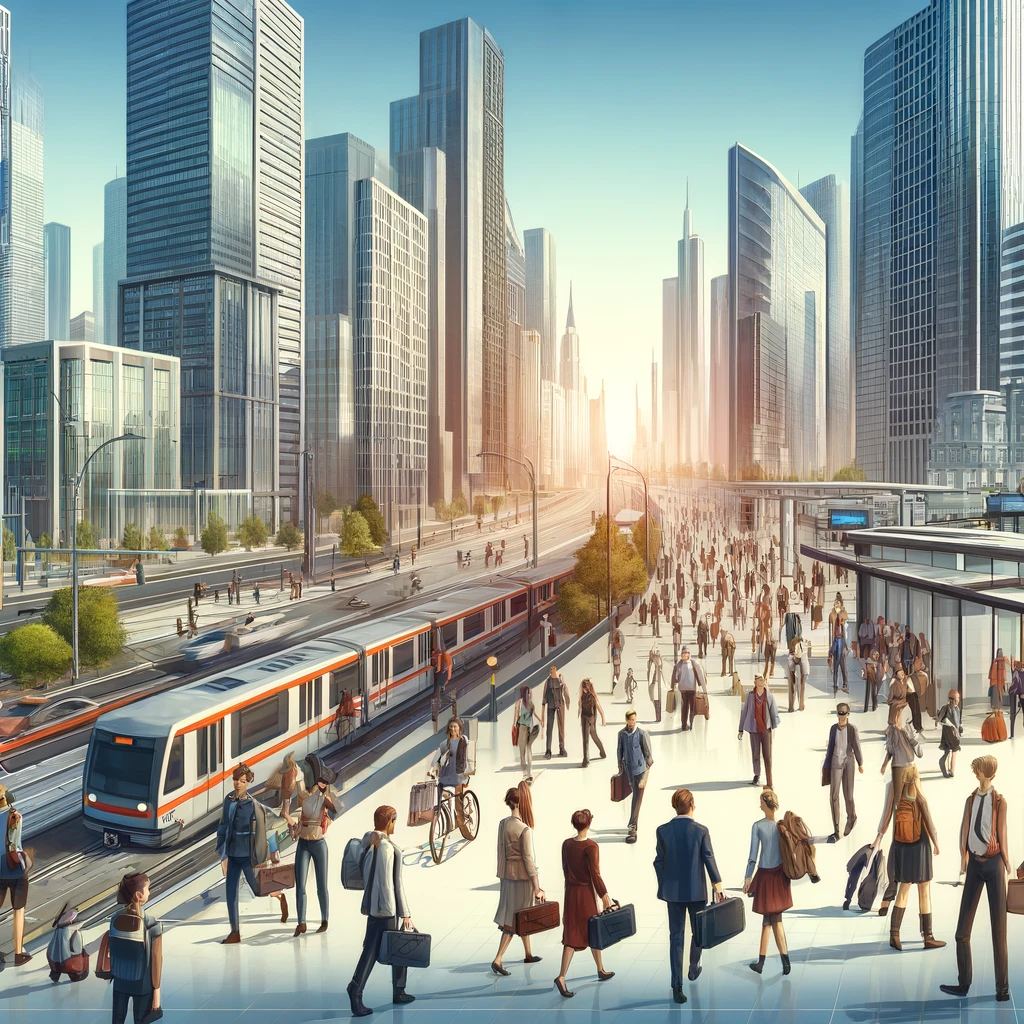
Today we see a tangled web of values behind the motivations of politicians, corporations, individuals, activists. These shifts in core values aren't historical footnotes. They're lived realities, shaping our behavior, our institutions, our relationships right now. Some of these values have caused real hardship and suffering. And yet they've also enabled us — you, me — to be here, with the space and time to sit and think about the concept of values at all.
People always think they're living through cataclysmic times. Since I was a child, the news has spun an endless story of imminent disaster — disease, terror, economic collapse, war, take your pick. I'm not sure how it feels from where you sit, but honestly, some days it feels like we might already be living in a dystopian future. Look at the growing gap between rich and poor. Rampant corruption. Industries turning huge profits from war or human sickness. Left versus right ideologies — not values — driving the decisions that matter most. And what about AI? What are its values, exactly?
We're at a critical moment — at least within the frame of our own lives. Will we stay distracted by the noise, following short-term thinking, edging apathetically toward global war? Albert Einstein is popularly quoted as saying, "I know not with what weapons World War III will be fought, but World War IV will be fought with sticks and stones" — though historians can't actually verify he said it, and the line may well be apocryphal. Hindu cosmology, meanwhile, describes a coming Kali Yuga — a dark age preceding the dissolution of the universe, traditionally associated with the god Shiva — a concept laid out across the Puranas that echoes themes found in the Bhagavad Gita's teachings on cosmic cycles and the great Kurukshetra war. Astrologists, on the other hand, tell us we're entering the Age of Aquarius, an era of peace and love. But these, like most scientific predictions about where the world is headed, are just perspectives. Nobody actually knows.

We create our shared reality. So rather than getting overwhelmed by complexity, or pulled under by doomscrolling, each of us needs to find what we can actually control. It might be as simple as our thoughts. Our emotional state. Our words and actions. Remember: every action ripples outward. And ripples meet, collide, rebound — they build into waves. So ask yourself: what are my core values today? Are they hand-me-downs from the society I happened to be born into, or are they choices I've actually made? And looking ahead, into an uncertain future — what values will we need to make our way through what's in front of us?
Maybe the way forward is also a way back. Integrating our hunter-gatherer ancestors' communal and ecological wisdom with the innovation and dynamism that's driven our more recent history — that combination may hold the key. A future that honors both human flourishing and the health of the only planet we've got.
Discover your own core values
The free, research-backed Values App assessment reveals your top five in about three minutes — no sign-up required.
Take the free assessment