
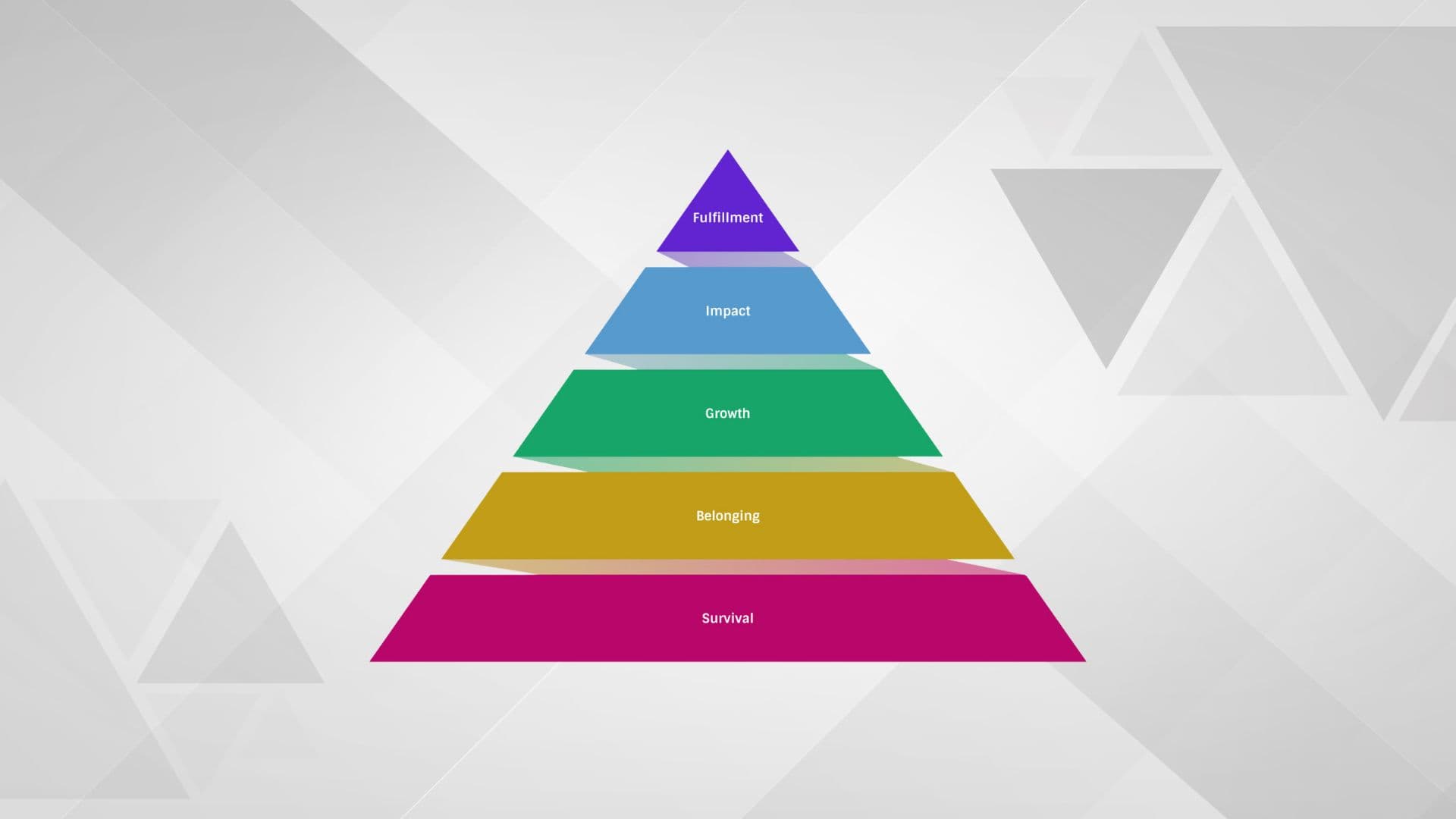

In any academic or philosophical endeavor, building a model is really an exercise in simplification. You're trying to take something abstract and messy and give people a handle to grab onto. That's it. That's the whole job.
Even well-regarded models like Maslow's Hierarchy of Needs have taken their share of critique over the years, and rightly so in places. Worth remembering: models aren't built for nuance. They're built to give us a framework for viewing and interpreting the world, nothing more. And as fewer people lean on traditional values frameworks, religious doctrines especially, I think we stand to gain a lot from having reference guides that build self-awareness and support decisive action.
The Values Pyramid is my attempt at one such guide. It offers a way of seeing how values shift depending on context, and how consistently applying them might lead somewhere like fulfillment. But I want to be upfront: this framework doesn't claim universality. Someone can be operating entirely from survival, right down at the base of the pyramid, and still be making a deeply impactful, deeply fulfilling contribution. Think of a doctor working in a conflict zone. Or a firefighter pulling someone out as a building comes down. Survival and meaning aren't mutually exclusive, not even close.
So, with all that mess fully acknowledged, here's the Values Pyramid, a model I built with input from academics, data-driven insights, and a fair amount of analysis.
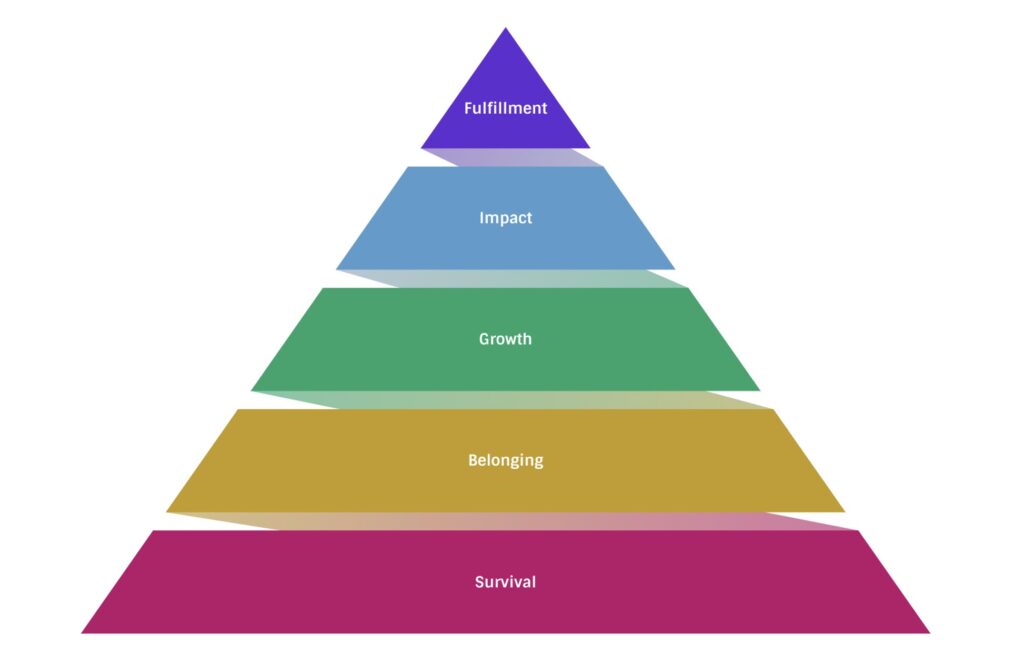
The values pyramid framework
At the base sit our Survival values. This is the fundamental stuff: security, food, water, shelter. I've included financial security here too, because without it, most of us slide toward hardship or poverty fairly quickly. That security might come from work, from family, from a spouse, from government support, from wherever. Doesn't matter much where it comes from. It matters that it's there.
Climb one level and you reach Belonging. This is love in its many forms, family bonds, friendships, intimate relationships. It's the warmth of being part of a community, of living in a society where people treat each other with respect and fairness. I've also placed sustainability here, because a sense of belonging to planet Earth belongs in this layer too.
Higher still, we hit Growth values. This is the passion for learning, for education, for knowledge. It's also where physical and mental well-being live. Achievement and competence show up here as well, our striving for mastery and success, both personally and professionally.
Near the peak, we enter Impact. Here we start valuing status and influence. Interestingly, high levels of competence often bring more autonomy, and with that autonomy comes a shift toward work-life balance. Wealth and material success sit in this layer too, the tangible markers of the climb so far.
And at the very top, Fulfillment. Meaning. Gratitude. A lot of people, at this stage, start seeking connection to something larger than themselves, spiritual, communal, or simply a sense of unity with the universe. Becoming a steward for the planet, supporting others, these are common paths into fulfillment.
Here's the thing about a hierarchy like this: the foundational values act as bedrock. When they're threatened, they demand our attention, full stop, whether we like it or not. But once we've secured a layer, we become free, genuinely free, to explore and prioritize the values above it. Fulfillment isn't reachable until the ground beneath it is stable.
Core values meta-categories
Here's another way to look at the same pyramid, this time through three meta-categories, or states of being: survive, alive, and thrive.
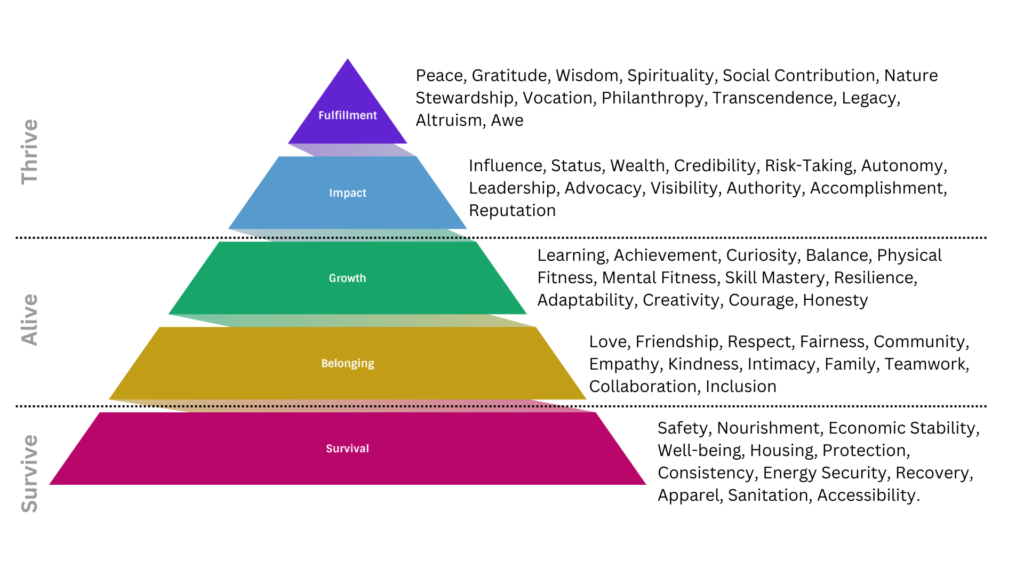
Let's walk through each one.
- Survive: This foundational state is about meeting our essential needs, security, health, resources. Everything necessary to maintain life and personal safety.
- Alive: Being "Alive" goes beyond mere survival. This is where personal growth and development happen, where potential starts to wake up and get some energy behind it. Learning, curiosity, the development of physical, emotional, and mental capacities, it's all here. It's also where people start actively engaging with life, chasing their interests, and feeling the joy of real achievements and real relationships.
- Thrive: In this stage, people flourish in a way that extends past themselves. It's about making a meaningful impact, feeling fulfilled, and contributing to the well-being of others. This is where growth and aliveness turn into lasting influence. Into legacy, really.
Next steps
Are you clear about what's important to you?
Maybe you already have an inkling. Maybe you've even got your values printed on a poster beside your desk. Or maybe you have no idea whatsoever, and that's fine too.
We've built several ways to help you get started with the values discovery process:
- Learn how to discover your values
- Explore our list of core values (includes a free PDF worksheet)
- Use the Values App
- Learn about values in the Values Course
- Get a copy of my forthcoming book
Discover your own core values
The free, research-backed Values App assessment reveals your top five in about three minutes — no sign-up required.
Take the free assessment